
As of June 2025
The leadership failures that sink technical teams are quiet ones. By the time they are loud, your best people have already decided to leave.
I have watched talented technical leaders derail their teams without realizing it. The warning signs are subtle, and most of them are about what stops happening, not what happens.
The tell
Silence
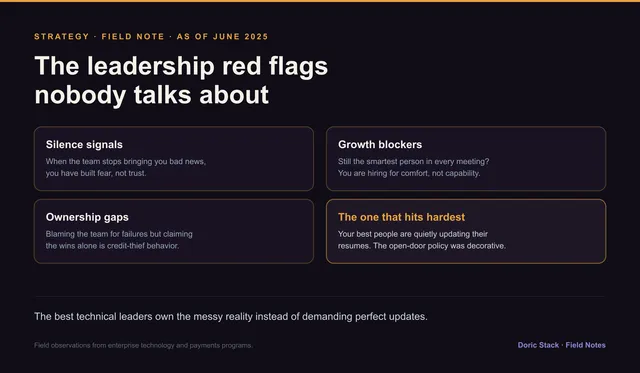
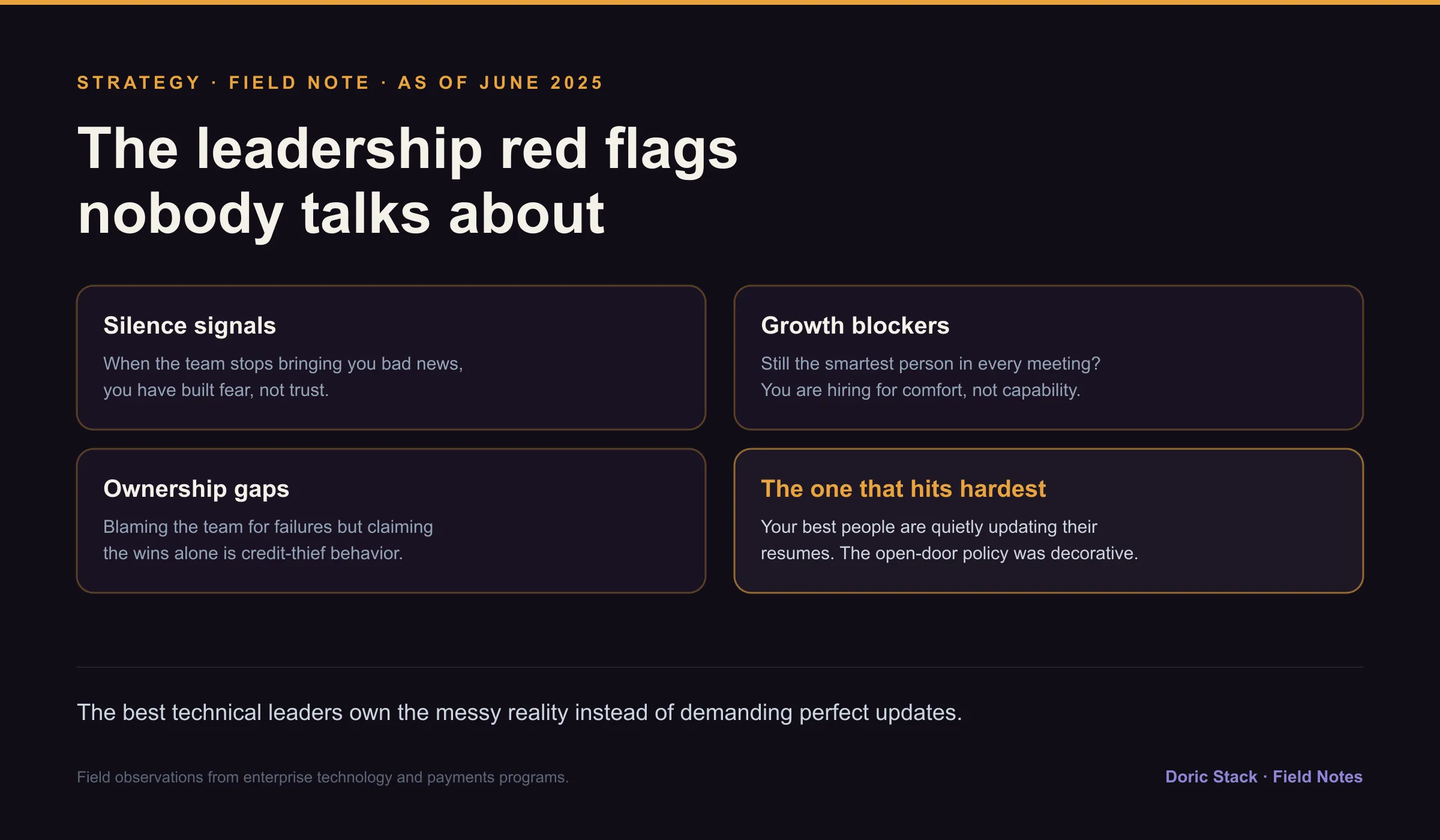
the team stops bringing bad news; you built fear, not trust.
The pattern
What stops
most of the red flags are about what stops happening, not what happens, which is what makes them easy to miss.
The one that hits hardest
Resumes
your best people are quietly updating theirs before anyone says a word. Field observation, not a study.
The one that hits hardest: your best people are quietly updating their resumes. That open-door policy was apparently just decorative.
The quiet warning signs
The four categories of leadership red flag - silence, stalled growth, ownership gaps, and the exodus signal - drawn from technical-team experience.
The quiet warning signs
The silence ones are the most dangerous because they look like calm. When the team stops bringing you bad news, you have trained them that bad news is unwelcome - so the real problems go underground. I have seen exactly this on enterprise technology programs: vendor delays, regulatory complexity, and scope creep get buried until they surface as a crisis, because somewhere along the way the team learned that leadership did not want to hear about problems. The growth blockers compound it. If you are still the smartest person in every meeting and nobody has outgrown their role in a year, you are not protecting quality - you are building a ceiling and calling it a standard.
What good looks like
The best technical leaders I have worked with did the opposite: they owned the messy reality instead of demanding perfect updates. Bad news traveled fast and safely. People outgrew their roles and left for bigger ones with the leader’s blessing. Credit flowed down, accountability flowed up.