
Field note

Cross-border instant payments reintroduce the intermediary into the design

Federal Reserve and RTP rule changes opened a path for an instant-payment leg to involve intermediaries or foreign banks. The customer experience may look direct, but FX, sanctions review, settlement finality, message validation, and returns bring correspondent functions back into the architecture.

Aug 17, 2026 · Navin Agrawal · Payments · 2 min read

Cross-border instant payments reintroduce the intermediary into the design

Visual brief

Visual brief

Cross-border instant payments reintroduce the intermediary into the design

As of August 2026

US instant rails can add a foreign leg without becoming global end-to-end networks. The design change brings intermediary functions back into a flow that many integrations modeled as domestic and direct.

The rail may remain instant on the US side while FX, compliance, and foreign settlement operate under different clocks and finality rules.

Fed proposal

Apr 8

the Federal Reserve proposed allowing FedNow transfers through non-Reserve-Bank intermediaries.

Design change

One foreign leg

an instant-payment flow can no longer assume every participant and identifier is domestic.

Operating reality

Correspondent

FX, screening, payout, and foreign-leg settlement still need an accountable institution.

The hidden domestic profile

Many integrations encode domestic assumptions in validators, beneficiary fields, routing tables, sanctions treatment, operating hours, and exception paths. Those assumptions stayed invisible because every supported flow shared them. The first foreign bank, BIC, currency conversion, or intermediary makes the profile explicit through failures.

The intermediary is a function, not a step backward

An intermediary can own FX liquidity, the foreign payout connection, local compliance, and exception recovery. A fintech may own the customer experience while a correspondent remains the regulated endpoint of the foreign leg. The architecture becomes a chain of accountable legs instead of one universal rail.
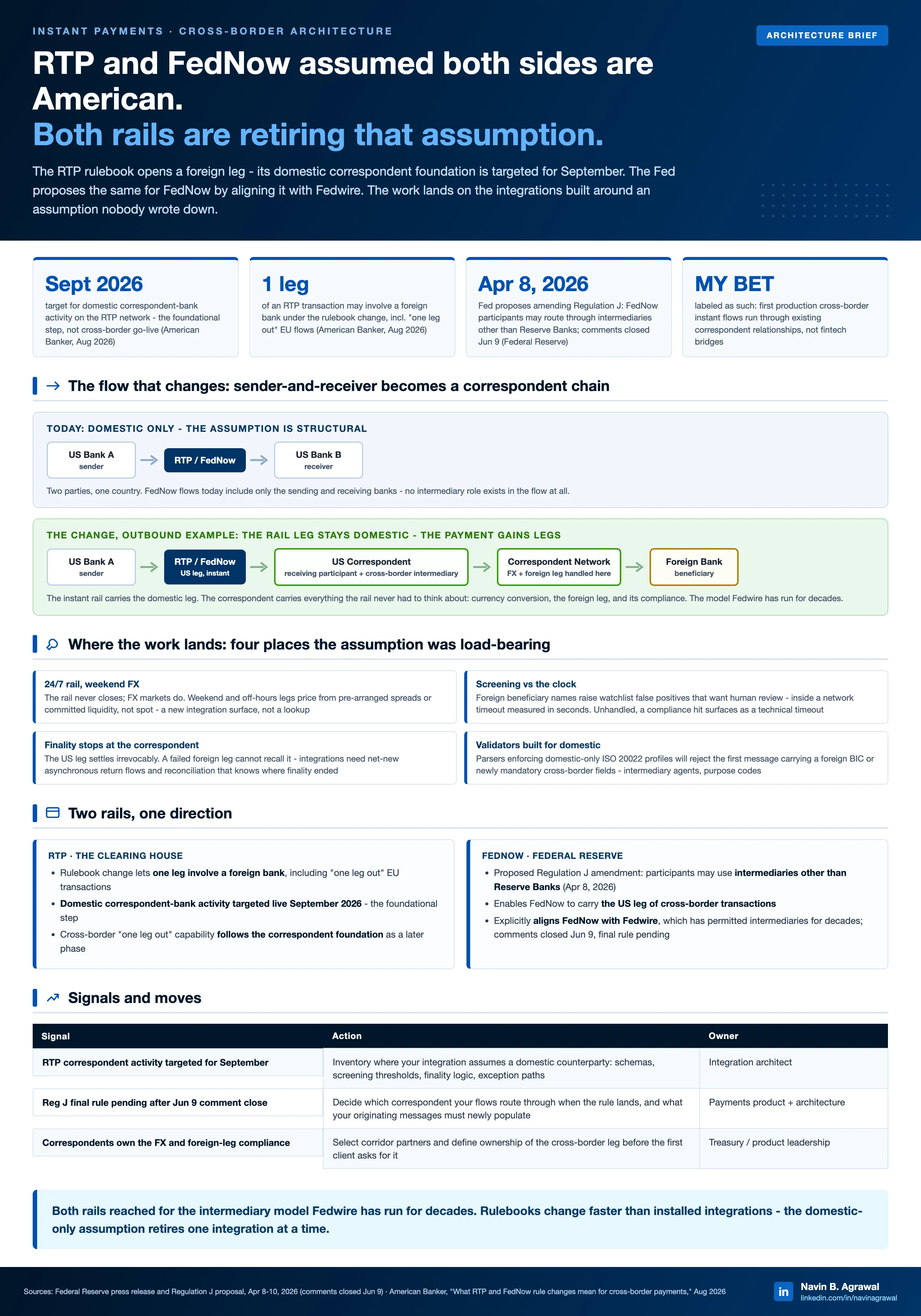
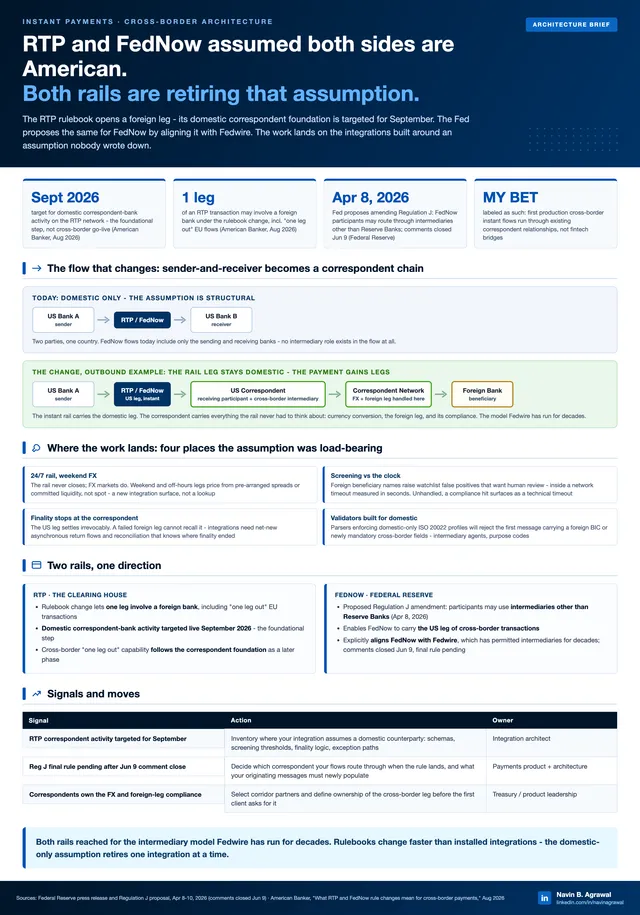
Cross-border instant-payment architecture showing US initiation over FedNow or RTP, an intermediary or correspondent, FX and sanctions controls, foreign-bank settlement, and non-atomic return paths.
The US leg can settle instantly while the foreign leg follows another market, clock, and recovery model.

The US leg can settle instantly while the foreign leg follows another market, clock, and recovery model.

The US leg can settle instantly while the foreign leg follows another market, clock, and recovery model.

Cross-border instant-payment architecture showing US initiation over FedNow or RTP, an intermediary or correspondent, FX and sanctions controls, foreign-bank settlement, and non-atomic return paths.

Four assumptions fail first

FX markets don’t share the rail’s always-on clock, so weekend pricing requires prefunded inventory or pre-arranged spreads. Foreign names and identifiers change screening volume and false-positive patterns. Settlement across legs is not atomic, so a failed foreign payout cannot reverse a completed US settlement as if nothing happened. Message validators built around domestic fields reject foreign BICs, addresses, and intermediary details.

The return model matters most. Product copy may call the experience cross-border instant, but operations need a truthful state for each leg: accepted, settled, converted, forwarded, credited, rejected, or returned. One end-to-end success flag hides the exposure created between those states.

Cross-border instant payments are a chain of settlement promises. Calling the chain one payment does not make the legs atomic.
Was this useful?

Choose once.

Related Posts

View All Posts »
X9.150 separates the checkout contract from the payment rail

X9.150 separates the checkout contract from the payment rail

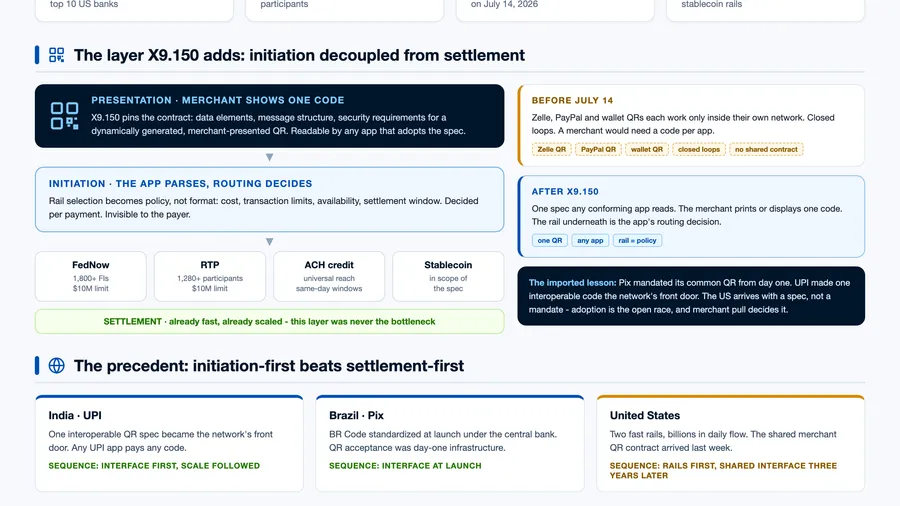
The United States built instant rails before it built an interoperable merchant-presented QR contract. X9.150 supplies that missing initiation layer, allowing the code at checkout to remain stable while routing policy chooses FedNow, RTP, ACH credit, or another supported rail.

Instant rails: the reality behind the marketing

Instant rails: the reality behind the marketing

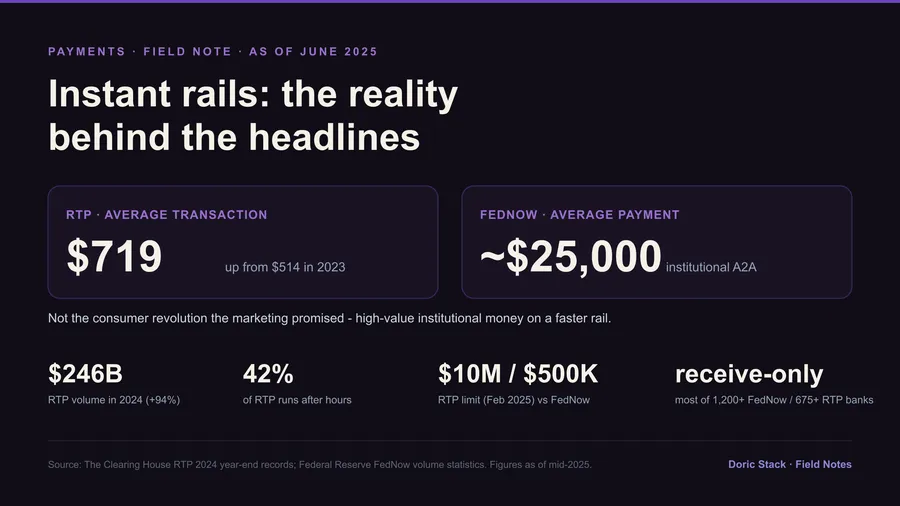
RTP cleared $246 billion in 2024 and the headlines said instant payments had arrived. The average transaction sizes tell a quieter story - this is high-value institutional money on a faster rail, not the consumer revolution that was promised.

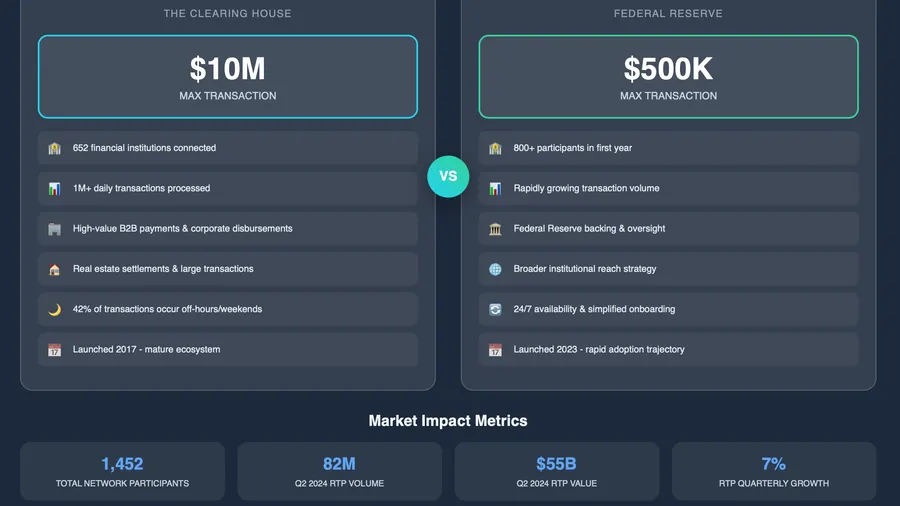
RTP vs FedNow: the $10 million strategic divide

RTP vs FedNow: the $10 million strategic divide

An $8M deal chopped into 16 payments because one bank used FedNow. With TCH-RTP at a $10M limit and FedNow at $500K, transaction size is quietly deciding which rail a corporate treasurer can use.

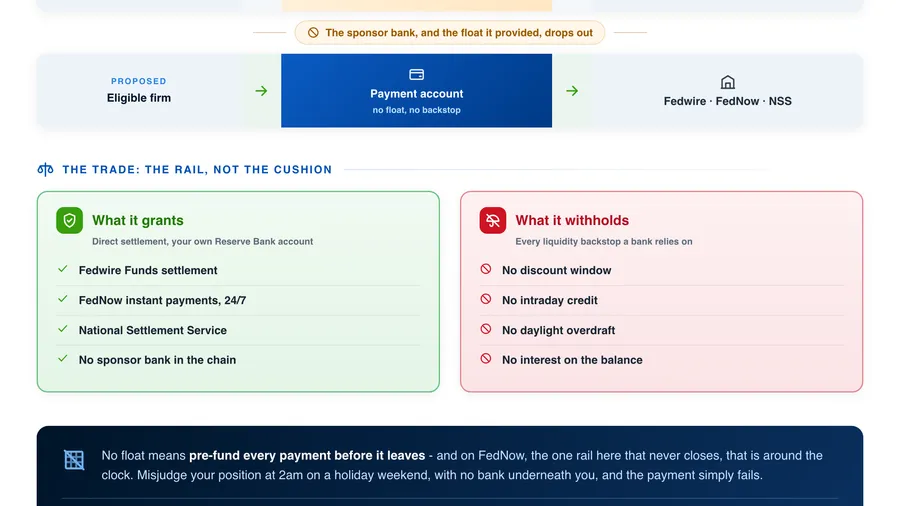
The Fed payment account grants the rail, not the safety net

The Fed payment account grants the rail, not the safety net

The Federal Reserve proposed a stripped-down payment account for legally eligible institutions. It can clear and settle on Fedwire, FedNow, and National Settlement Service, but it withholds the cushion that made sponsor-bank access survivable: no discount window, no intraday credit, no daylight overdraft, no interest on balances.